Europe
UNESCO World Heritage Sites in Austria
Austrian World Heritage Sites · UNESCO sites in Austria map · historical landmarks in Austria
Austria has 14 sites on the UNESCO World Heritage List — 13 cultural and 1 natural inscriptions, inscribed between 1996 and 2021. This map of UNESCO sites in Austria covers every listing, with a short description, the inscription year and the nearest airports — the fastest way to see the country's most important historical sites and landmarks in one place.
Austrian World Heritage Sites range from Ancient and Primeval Beech Forests of the Carpathians and Other Regions of Europe onwards; Historic Centre of the City of Salzburg was the country's first inscription, added in 1996; Frontiers of the Roman Empire – The Danube Limes (Western Segment) is the most recent, listed in 2021; recurring threads across the list include ancient civilizations.
5 inscriptions are transnational, shared with neighbouring countries: Ancient and Primeval Beech Forests of the Carpathians and Other Regions of Europe, Fertö / Neusiedlersee Cultural Landscape and Frontiers of the Roman Empire – The Danube Limes (Western Segment). Start with Ancient and Primeval Beech Forests of the Carpathians and Other Regions of Europe, City of Graz – Historic Centre and Schloss Eggenberg and Fertö / Neusiedlersee Cultural Landscape, then use the map above to plan a route between the rest.
- Sites
- 14
- Cultural
- 13
- Natural
- 1
- First inscribed
- 1996
Sites on the map
Inscriptions Austria shares with other countries are not plotted here — you will find them in the list below.
Flying in
Airports closest to the most sites in this country.
- VIEVienna6 sites
- SZGSalzburg2 sites
- SOBSármellék1 site
- GRZFeldkirchen bei Graz1 site
- LNZLinz1 site
- BUDBudapest1 site
Keep exploring
All 14 sites in Austria

List of UNESCO World Heritage Sites in Austria
Every inscription with its year and category. Open a site for its story, map location and nearest airports.
| Site | Year | Type | What it is |
|---|---|---|---|
| Ancient and Primeval Beech Forests of the Carpathians and Other Regions of EuropeThis transnational property includes 93 component parts in 18 countries. | 2007 | Natural | This transnational property includes 93 component parts in 18 countries. |
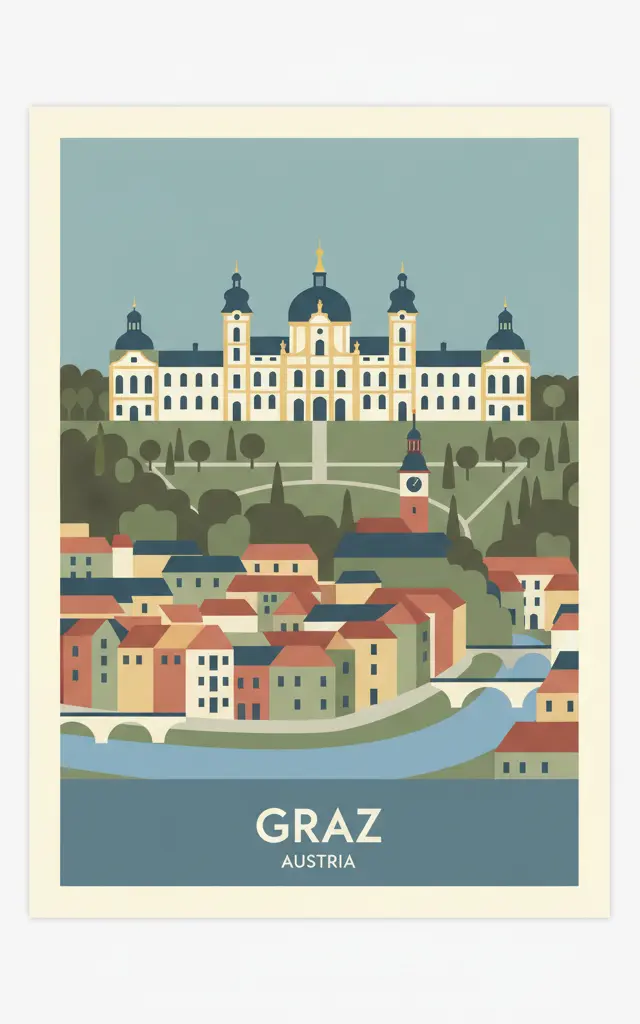
| City of Graz – Historic Centre and Schloss EggenbergThe City of Graz – Historic Centre and Schloss Eggenberg bear witness to an exemplary model of the living heritage of a… | 1999 | Cultural | The City of Graz – Historic Centre and Schloss Eggenberg bear witness to an exemplary model of the living heritage of a central European urban… |
| Fertö / Neusiedlersee Cultural LandscapeThe Fertö/Neusiedler Lake area has been the meeting place of different cultures for eight millennia. | 2001 | Cultural | The Fertö/Neusiedler Lake area has been the meeting place of different cultures for eight millennia. |
| Fertö / Neusiedlersee Cultural LandscapeThe Fertö/Neusiedler Lake area has been the meeting place of different cultures for eight millennia. | 2001 | Cultural | The Fertö/Neusiedler Lake area has been the meeting place of different cultures for eight millennia. |
| Frontiers of the Roman Empire – The Danube Limes (Western Segment)It covers almost 600km of the whole Roman Empire’s Danube frontier. | 2021 | Cultural | It covers almost 600km of the whole Roman Empire’s Danube frontier. |
| Frontiers of the Roman Empire – The Danube Limes (Western Segment)It covers almost 600km of the whole Roman Empire’s Danube frontier. | 2021 | Cultural | It covers almost 600km of the whole Roman Empire’s Danube frontier. |
| Hallstatt-Dachstein / Salzkammergut Cultural LandscapeHuman activity in the magnificent natural landscape of the Salzkammergut began in prehistoric times, with the salt… | 1997 | Cultural | Human activity in the magnificent natural landscape of the Salzkammergut began in prehistoric times, with the salt deposits being exploited as early… |
| Historic Centre of the City of SalzburgSalzburg has managed to preserve an extraordinarily rich urban fabric, developed over the period from the Midd. | 1996 | Cultural | Salzburg has managed to preserve an extraordinarily rich urban fabric, developed over the period from the Midd. |
| Historic Centre of ViennaVienna developed from early Celtic and Roman settlements into a Medieval and Baroque city, the capital of the. | 2001 | Cultural | Vienna developed from early Celtic and Roman settlements into a Medieval and Baroque city, the capital of the. |
| Palace and Gardens of SchönbrunnFrom the 18th century to 1918, Schönbrunn was the residence of the Habsburg emperors. | 1996 | Cultural | From the 18th century to 1918, Schönbrunn was the residence of the Habsburg emperors. |
| Prehistoric Pile Dwellings around the AlpsThis serial property of 111 small individual sites encompasses the remains of prehistoric pile-dwelling (or stilt… | 2011 | Cultural | This serial property of 111 small individual sites encompasses the remains of prehistoric pile-dwelling (or stilt house) settlements in and around… |
| Semmering RailwayThe Semmering Railway, built over 41 km of high mountains between 1848 and 1854, is one of the greatest feats of civil… | 1998 | Cultural | The Semmering Railway, built over 41 km of high mountains between 1848 and 1854, is one of the greatest feats of civil engineering from this… |
| The Great Spa Towns of EuropeThis transnational serial property comprises eleven spa towns, located in seven European countries: Baden bei Wien… | 2021 | Cultural | This transnational serial property comprises eleven spa towns, located in seven European countries: Baden bei Wien (Austria); Spa (Belgium)… |
| Wachau Cultural LandscapeThe Wachau is a stretch of the Danube Valley between Melk and Krems, a landscape of high visual quality. | 2000 | Cultural | The Wachau is a stretch of the Danube Valley between Melk and Krems, a landscape of high visual quality. |
Frequently asked questions about World Heritage in Austria
- How many UNESCO World Heritage Sites are there in Austria?
- Austria has 14 UNESCO World Heritage Sites: 13 cultural and 1 natural.
- What was the first World Heritage Site in Austria?
- Historic Centre of the City of Salzburg was inscribed in 1996. Salzburg has managed to preserve an extraordinarily rich urban fabric, developed over the period from the Midd.
- What is the newest World Heritage Site in Austria?
- Frontiers of the Roman Empire – The Danube Limes (Western Segment), inscribed in 2021. It covers almost 600km of the whole Roman Empire’s Danube frontier. The property formed part of the much large frontier of the Roman Empire that encircled the M.
- Which sites in Austria are natural World Heritage Sites?
- 1 of the 14 listings is natural: Ancient and Primeval Beech Forests of the Carpathians and Other Regions of Europe.
- Which UNESCO sites in Austria are easiest to reach?
- Each site page lists the closest airports with distance, so you can pick the gateway city first and work outwards. The "Flying in" panel on this page shows the main gateways for Austria.
- What are the main historical sites and landmarks in Austria?
- The 14 UNESCO-listed sites above are Austria's internationally recognised historical sites and landmarks, starting with Historic Centre of the City of Salzburg (1996). Each entry links to a full page with a map, photos and travel notes.
- Is there a map of Austrian World Heritage Sites?
- Yes — the map on this page plots all 14 Austrian UNESCO World Heritage Sites; click any marker to open that site's page.